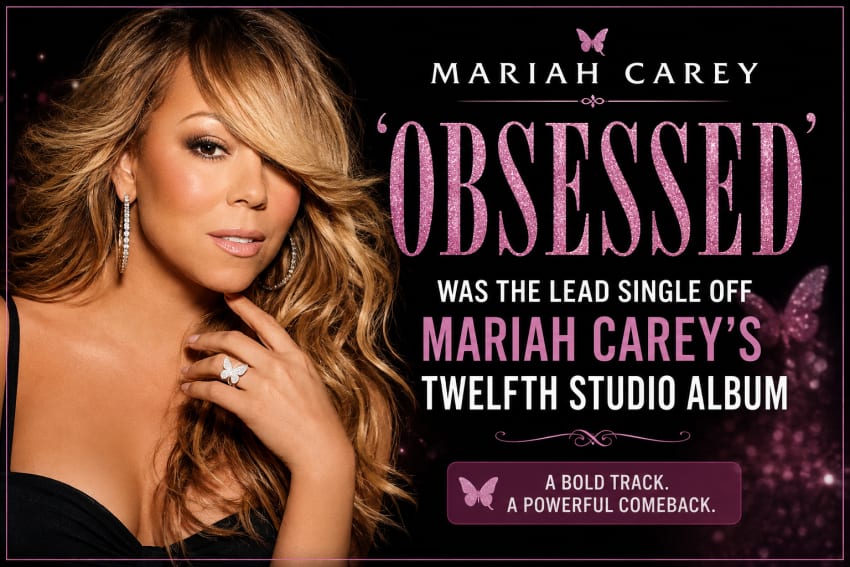
When Mariah Carey released “Obsessed,” it quickly became one of the most talked-about moments in her modern career, not only because of its catchy hook and confident tone, but also because of how strategically it positioned her twelfth studio album in the public eye. The release of the track marked a bold shift in tone and marketing direction, helping the project gain immediate attention in a crowded pop and R&B landscape.
"Obsessed" was the lead single off Mariah Carey's twelfth studio album, and that decision played a major role in shaping the album’s early momentum. As a lead single, it carried the responsibility of reintroducing Carey’s sound to both long-time fans and newer listeners. Instead of choosing a slow ballad, which she is widely known for, she went with a more aggressive, rhythmic, and attitude-driven track. This immediately signaled that the era would be playful, self-aware, and culturally responsive.
One of the smartest aspects of selecting “Obsessed” as the lead single was its strong identity. The song blends pop, hip-hop influences, and a sharp lyrical edge that made it instantly recognizable. It also sparked conversation due to its perceived lyrical subtext, which fueled online debates, memes, and media coverage. In the music industry, attention is currency, and “Obsessed” generated it in abundance before the album had even fully taken shape in public perception.
Another reason the choice worked so well is its commercial appeal. The production is clean, repetitive in a memorable way, and designed for radio rotation and digital replay. Carey’s vocal performance balances confidence with humor, making the track accessible without losing personality. This balance is crucial for a lead single, as it must appeal broadly while still representing the artist’s vision.
The music video also contributed heavily to the single’s success. Featuring Carey in a series of character-driven scenes, it reinforced the song’s themes while adding a visual narrative that audiences could discuss and share. In the age of digital media and viral content, this visual component amplified the track’s reach far beyond traditional music channels.
Additionally, the decision to lead with “Obsessed” helped redefine public conversation around Carey at the time. Instead of focusing solely on her legacy as a ballad singer, the single highlighted her versatility and willingness to engage with contemporary pop culture trends. This repositioning helped her remain relevant in an evolving music industry where adaptability is key.
Ultimately, choosing “Obsessed” as the lead single was a calculated move that paid off in visibility, engagement, and commercial performance. It demonstrated a clear understanding of how modern audiences consume music—not just through audio, but through narrative, controversy, and shareable moments. The song didn’t just promote an album; it created a cultural moment that extended the lifespan of the entire project.